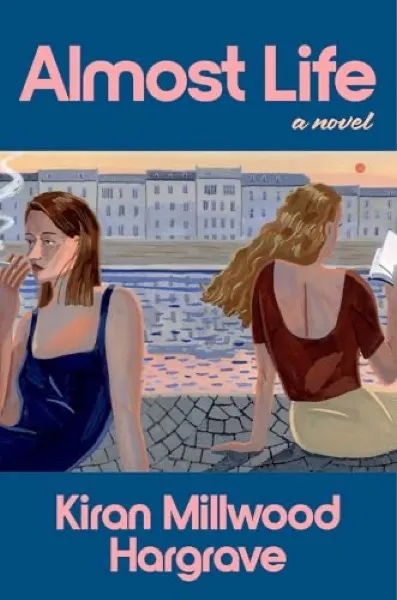
📚 Almost Life
Genre: Fiction, Literary Fiction, LGBTQ+ Romance Originally Published: 2026
💭 Quick Summary & Thoughts
The blurb promised me a book “beautifully capturing young love and all its complexities,” a story “of longing for the paths not taken, and the almost lives we live.” Reader, it is none of those things.
Full disclosure on how I even got here: I read this to close out the Goodreads spring challenge. One of the prompts was to read something from a Pride Month list, this one caught my eye from the description, and I went in with zero prior knowledge beyond that back-cover pitch. That pitch oversells it dramatically. What’s actually inside is a fairly boring book about two characters who, to my mind, never get developed into people worth caring about.
I’ll keep the overview short and spoiler-free, partly out of habit and partly because I genuinely don’t want to ruin it for you in the unlikely event you decide to pick it up. Though, and I say this with love, I’m not entirely sure why you would.
⚠️ Spoiler Zone
🚨 Click to reveal spoilers 🚨
The book actually starts off fine. There’s a chance encounter between Erica and Laure, the awkwardness and complexity of those first meetings and that initial contact, and it gave me genuine hope. I figured this would show their love blossoming, and then something outside their control would pull them apart, and we’d follow how they stayed tethered to each other across the years. A slow burn, both of them living separate lives but quietly reminiscing about what life might’ve looked like had they stayed together. Honestly? Saying my own expectations out loud makes that sound like a far better book than the one I got 😂.
Once Erica and Laure are separated, Erica moves on pretty quickly at college, first with a geography major, then with another girl (whose name I honestly can’t remember), while Laure spirals into alcohol addiction. So far, so fine. Then it all starts sliding. Erica visits France with her then-girlfriend to meet Laure, and this is where the trouble begins: there’s this unnecessary scene where Erica clings to Laure for no discernible reason. She knew she was going to see her. Shouldn’t she have braced herself? What is this childish behaviour? And from here, the moral fibre of both protagonists just dissolves, as if they’re competing to be crowned the worst person you could ever date.
After all that cringe, Erica moves on again with Anthony, who is, of course, rich and handsome, because I absolutely did not see that coming, a girl falling for a rich, handsome guy 😂. There’s a scene where they’re about to share their first kiss, and Erica spots Anthony getting a drink with one of his exes, instantly leaps to “they’re going to hook up,” and reacts by getting drunk enough to faceplant into a bush and pass out. That tells you everything about her.
Meanwhile, Laure finally gets the help she needs through AA meetings, and then gets together with her sponsor, which is wrong on so many levels. Then it turns out she’s basically a captive: Gabrielle, a manipulative woman who doesn’t want Laure to have any friends. Weird detour from the original story, but okay. Laure eventually gets help from Michel — the gay café owner at the heart of her old circle of friends — and then he gets sick with HIV, another odd detour I couldn’t quite place the purpose of. Erica, for her part, travels to Paris again, this time hiding behind “I want to write” as the excuse, and proceeds to do everything except write, drifting through galleries and frittering time away without producing a single page. She meets Laure, and they hook up. She’s a married woman, and they go at it with no regard for the consequences. Erica even contemplates leaving Anthony to stay, but doesn’t, because money and kids, and she can’t be bothered to come clean to him either. No, instead she decides to have children with him and gets pregnant. What? How do you trample one boundary after another while endlessly justifying it to yourself? Then she has another kid, slides into depression, complete with intrusive thoughts about harming her children, yet another detour I’m not sure the book needed.
Fast forward, the kids are grown, years have passed, and Anthony happens to cross paths with Laure through his work. They arrange to meet at the place Laure’s father left her and, lo and behold, they hook up again. Who could possibly have guessed? And just like before, she hides it from Anthony AGAIN. Wow.
Then Laure writes her own book, it becomes a success, and now it’s her turn to travel to England and be hosted at Erica’s place. Oh, and by the way, Laure is now with Barbara, who’s been hovering on the fringes this whole time. And they hook up again. What is wrong with these characters, and with the author? Once more, they hide it from their significant others AAAGGGAAAIIINNN. What horrible people.
And then Laure is hospitalized after a stroke, and Erica doesn’t even go to see her, after all of this. So much for consistency of motivation, there is none. And eventually Erica learns Laure is dead, three years after the fact. Slow clap. Awful writing.
A few of the smaller things also got under my skin. The attack on the gay bar, I assumed it would land with some weight on the story, but it’s clearly slotted in for shock value and as a talking point, nothing more. Anthony is a complete pushover, confessing that he knew Erica was sleeping with Laure at every opportunity and still doesn’t leave her. She’s plainly manipulative and deceitful, so why on earth are you staying?
And then the stuff that just plain irked me. If you want to write a classic boy-meets-girl love story, then write one, why frame it as a lesbian story and then make one of the characters violently man-like in appearance and mannerisms? And why do these characters not stop talking about their breasts and nipples? It felt like every other chapter had some erotic, lingering description of private parts, and I couldn’t tell you what any of it accomplished. Finally, the Paris and art angle. I’ve been to Paris, and part of the draw here was the setting, I thought I might catch some references, a nice callback to artworks I’d seen in person. There aren’t any, really. The city itself barely features, which is a shame for a novel spanning decades, and the art is just as absent. Apparently, after all that artistic study, you end up loving Monet’s water lilies, just like the rest of us commonfolk.
The one thing I genuinely liked: I had the Audible version, and the accent on the French characters was lovely, the way the narrator pronounces Barbara and Laure and the rest. That alone made the whole thing a touch more bearable.
Overall, I’m genuinely at a loss as to why this book exists. It’s a meaningless story populated by abhorrent characters, with no real point to make and nothing it actually wants to say, beyond leaning on its LGBTQ+ branding as the entire hook. Strip that away and there’s simply nothing underneath, no theme, no insight, no one worth rooting for. That, more than anything, is what frustrates me about it.
💬 Quote Corner
“It is the condition of the heartbroken to believe no one has felt as they have, ever in the history of the world. It’s an affront to feel otherwise, I know, but the sooner you accept that for every lover there is someone suffering, the sooner you’ll heal.”
“She was everything. Dirty and beautiful and clever and rude. ‘French.’”
⭐ Ratings
| 📊 Plot | |
| ⚡ Pacing | |
| 👥 Characters | |
| ✍️ Writing Style | |
| 🎯 Overall |