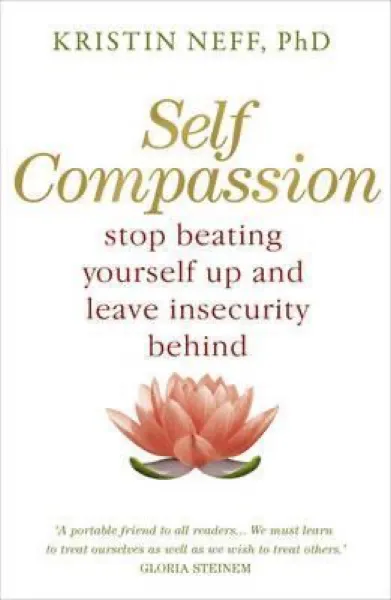
📚 Self-Compassion: Stop Beating Yourself Up and Leave Insecurity Behind
Genre: Non-Fiction, Self-Help, Psychology Originally Published: 2011
💭 Quick Summary & Thoughts
Some books only land if you read them at the right moment, and this is one of them. It’s a wonderful book, but I happened to pick it up at a time when I was struggling with a few things in my life, and it genuinely helped me work through them. If I’d read it at a different point, I don’t think it would have landed the same way. Timing matters with books like this.
The core idea is simple: treat yourself with the same kindness you’d offer a friend. And that first chapter where Neff asks you to think about how you’d respond to a friend going through the same situation you’re in - that hit me hard. I realized just how different my inner dialogue is compared to how I’d actually talk to someone I care about. If a friend came to me with the same struggles, I’d be understanding, patient, supportive. But with myself? Harsh, critical, demanding more. That gap was eye-opening.
As someone who has constantly judged myself very harshly and expected so much more from myself, the concept of self-compassion and mindfulness felt genuinely life-changing. I don’t think I’ll adopt all of it immediately - it’s going to take time - but having read the book, I at least recognize when I’m being too hard on myself. And that awareness alone is worth a lot.
That said, the book is too long. The points Neff wanted to make came across clearly, but she kept going. Example after example, study after study, driving home the same idea that had already landed chapters ago. I get that some readers might need those extra examples to connect with the material, but quite a lot of them weren’t relatable to me, and it started to feel repetitive and a little boring. The book could have been a solid 200 pages instead of 300+.
One thing that really stuck with me was a quote - not original to Neff, and I’d heard it before, but it had been a while: “Pain is inevitable, suffering is optional.” That line hit different this time around. I realized I’d been looking at certain things in my life completely wrong. The cognitive dissonance of wanting things to turn out a certain way, and them turning out differently, was causing me so much grief. Coming to the realization that some things are simply out of my control - and that instead of obsessing over why they didn’t go the way I wanted, it’s more helpful to accept what happened and focus on what I can do about it - that was a genuine shift.
Between this book and Meditations by Marcus Aurelius, I feel like I have a much better handle on how I want to approach life’s challenges. And I’m sure there will be plenty of those ahead.
⚠️ Spoiler Zone
🚨 Click to reveal spoilers 🚨
The book is structured around three core components of self-compassion: self-kindness (being gentle with yourself rather than harshly critical), common humanity (recognizing that suffering and imperfection are part of the shared human experience), and mindfulness (holding your painful thoughts and feelings in balanced awareness rather than over-identifying with them).
Neff draws heavily on her own research as a psychologist, and she weaves in personal stories about her own struggles - including raising a child with autism - to illustrate how self-compassion works in practice. These personal sections are some of the strongest in the book because they feel genuine and vulnerable.
Where the book loses momentum is in the sheer volume of exercises and examples. Each chapter introduces the concept, explains the research, gives multiple examples, and then offers guided exercises. If you’re already on board with the idea after the first few chapters, the rest can feel like you’re being re-sold on something you’ve already bought. The later chapters on self-compassion in relationships and parenting are useful for some readers, but they felt like a stretch of the core material rather than a natural extension.
The most powerful moment for me was early on - the friend exercise. Neff asks you to write down how you’d respond to a close friend who came to you feeling inadequate, and then write down how you typically respond to yourself in the same situation. Seeing those two responses side by side on paper was genuinely jarring. It’s one thing to intellectually know you’re hard on yourself; it’s another to see the evidence staring back at you in your own handwriting.
🧠 Key Takeaways
-
Talk to yourself like you’d talk to a friend. When you’re going through a hard time, ask yourself: “What would I say to a close friend in this situation?” Then say that to yourself instead of the harsh, critical voice you default to. The gap between those two responses is where self-compassion lives.
-
Self-compassion is not self-pity. Self-pity says “poor me, why is this happening to me?” Self-compassion says “this is hard, and that’s okay - everyone struggles.” The difference is that self-compassion connects you to common humanity rather than isolating you in your own suffering.
-
Pain is inevitable, suffering is optional. Suffering comes from resisting reality - from the gap between how things are and how you think they should be. Accepting what has happened and focusing on what you can do about it is far more productive than agonizing over why things didn’t go your way.
-
Mindfulness is the first step. You can’t change a pattern you don’t notice. Self-compassion starts with simply recognizing when you’re being too hard on yourself - without judgment, without trying to fix it immediately, just awareness.
-
Self-criticism doesn’t motivate - it paralyzes. We tell ourselves that being harsh keeps us sharp and motivated. But research shows the opposite: self-criticism triggers the threat response and makes you anxious and avoidant. Self-compassion, on the other hand, creates the emotional safety to try, fail, and try again.
-
You don’t have to earn your own kindness. Self-compassion isn’t a reward for getting things right. It’s available to you especially when things go wrong. That’s when you need it most, and that’s when most of us withhold it.
💬 Quote Corner
“This is a moment of suffering. Suffering is part of life. May I be kind to myself in this moment. May I give myself the compassion I need.”
“You don’t want to beat yourself up for beating yourself up in the vain hope that it will make you stop beating yourself up.”
“Pain is inevitable, suffering is optional.”
“Suffering = pain x resistance.”
⭐ Ratings
| 📊 Plot | |
| ⚡ Pacing | |
| 👥 Characters | |
| ✍️ Writing Style | |
| 🎯 Overall |