

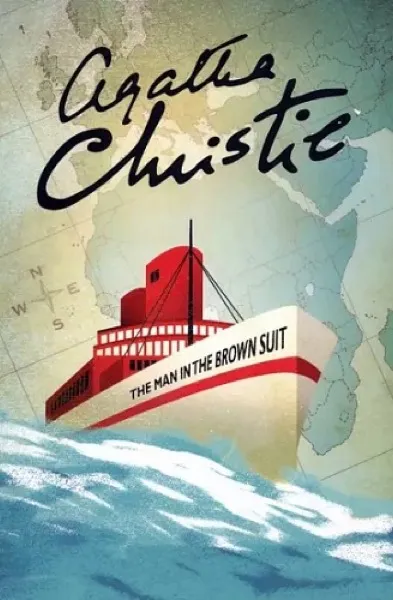
📚 The Man in the Brown Suit
Genre: Mystery, Crime, Classics Originally Published: 1924
💭 Quick Summary & Thoughts
I have read a lot of mysteries, so getting properly surprised by one has become rare. This one got me. Not all the way, I saw part of it coming, but I didn’t close the last stretch of distance, and after this many whodunits, that alone is worth taking a note off.
Part of the fun here is that it’s Christie off the beaten path, no Poirot, no Marple, just a completely different kind of story. And at the centre of it is one of the most delightful narrators I’ve come across in a while. The plot leans on a few too many happy coincidences to move its heroine along, and as a pure whodunit it isn’t as tightly constructed as Christie’s best. But the voice, the humour, and the sheer charm of the lead more than carry it.
So no, not top-tier Christie if you’re grading strictly on the mystery. As a rollicking, funny, globe-trotting adventure with a heroine you’ll adore, though, it’s an easy one to recommend. My one real gripe strays into spoiler territory, so I’ve saved it for below.
⚠️ Spoiler Zone
🚨 Click to reveal spoilers 🚨
Anne Beddingfeld is the whole reason to read this. For a book written in the 1920s, having a heroine with this much of a head on her shoulders, one who isn’t preoccupied with love and marriage as her life’s project, is genuinely refreshing. She’s headlong and brash, but that’s rather the point: protagonists in these stories have to be, because a timid one never gets anywhere. They’d be too scared to trespass, or rifle through someone’s belongings, or, in Anne’s case, bluff her way in under false pretences to land a meeting with a newspaper owner and fund her own investigation. That whole scene is gold, her talking him into giving her a shot, and him relenting only if she proves herself first. It tells you exactly what spirit the book was written in. The way she makes her way across the world, things do keep breaking her way, but you only stumble into those opportunities if you’re willing to take the risk in the first place.
The reveal got me, I’ll admit it. I had Pagett pegged as the Colonel for the longest time, and my case felt airtight: IT WAS THE BUTTLER, obviously; the Colonel struck me as someone who wouldn’t want to be sitting in an obvious position of power himself; and, to seal it, Pagett was in London at the time of the crime, which is exactly where the murder happened. Everything pointed his way. What really threw me was how innocent and funny Sir Eustace came across. His diary runs alongside the main narrative, and to me he read like a Wooster, so naturally I expected the butler-type to be his Jeeves. Instead he’s the man himself. I’ll give Christie this: Eustace’s diary is the comic relief the book needed, and it makes the whole thing a far more pleasant read.
My one real complaint is the disguises. I struggle to buy that a single person can masquerade as many different people across a book, across genders even, and never get made, especially by people who keep running into him. The Chichester business was a bit much for me. Compare it to Sherlock Holmes: when Holmes puts on a disguise, it’s to pass as a nobody to strangers, wandering into a bar dressed as a sailor to chat up other sailors. That works. Fooling people who know you, repeatedly, does not.
That one quibble aside, I don’t have much to hold against it.
💬 Quote Corner
“I had the firm conviction that, if I went about looking for adventure, adventure would meet me halfway.”
“It is really a hard life. Men will not be nice to you if you are not good-looking, and women will not be nice to you if you are.”
“You think you admire moral qualities, but when you fall in love, you revert to the primitive where the physical is all that counts.”
⭐ Ratings
| 📊 Plot | |
| ⚡ Pacing | |
| 👥 Characters | |
| ✍️ Writing Style | |
| 🎯 Overall |