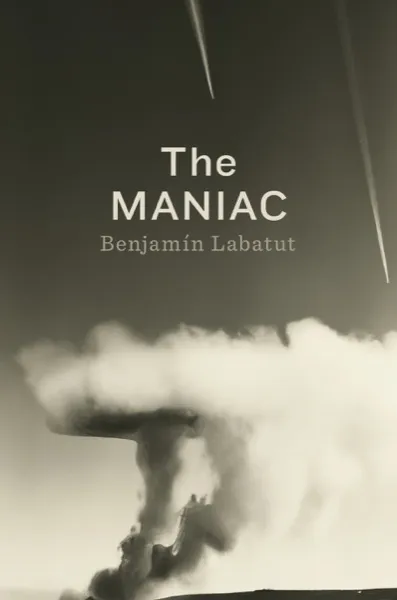
📚 The MANIAC
Genre: Fiction, Historical Fiction, Literary Fiction, Philosophy Originally Published: 2023
💭 Quick Summary & Thoughts
Here’s the strange thing about this book: I finished it genuinely unsure where the facts ended and the fiction began. It’s billed as fiction based in facts, and that blurriness is both its biggest strength and my only real gripe with it.
The book splits into two parts. The first deals with the life of John von Neumann, but told through the lenses of the people closest to him - his friends, his wife, his daughter. That structure gives you a glimpse into his life and thought process, and into how these geniuses differ so wildly from common folk like us. They operate on a completely different level, and yet that immense mental aptitude comes with its own unique set of challenges - we get a glimpse of that too.
The second section is about AlphaGo, and how the first time it beat the world’s best players actually played out. There are obvious parallels to the chess world - Garry Kasparov getting beaten by a machine for the first time - but the book doesn’t really explore that thread, which felt like a missed opportunity. That said, it’s still a solid section that captures the mindset and the angst the players felt on being defeated.
Overall it’s a fascinating, unsettling read about genius, ambition, and the things humanity builds without quite asking whether it should. The first half is the real draw; the second is good but more or less what I expected.
⚠️ Spoiler Zone
🚨 Click to reveal spoilers 🚨
The way the book starts? Oof, chills. Literal chills.
“On the morning of the twenty-fifth of September 1933, the Austrian physicist Paul Ehrenfest walked into Professor Jan Waterink’s Pedagogical Institute for Afflicted Children in Amsterdam, shot his fifteen-year-old son Vassily in the head, then turned the gun on himself.”
That has to captivate you immediately. It opens on the struggles Ehrenfest faced and what led him to that murder-suicide - a very strong start in my opinion.
Then the book shifts to John von Neumann and his life story. How he was an exemplary kid from the very beginning - extremely sharp, ruthlessly logical in how he approached problems. How he loved playing with the loom his father got him and couldn’t rest until he’d pieced together exactly how the machine worked. We also see how awkward his towering IQ made him, and how he had a way of making everyone around him feel inferior. There’s a section where a professor describes a so-far-unsolved problem he’s working on. Neumann thinks about it for a bit, solves it, and moves on like it’s no big deal. The professor is left stunned and, quite frankly, demoralised.
Then we get to the part where he writes the foundational work on game theory, helps build the atomic bomb, and pioneers the field of artificial intelligence. He becomes so central to US military strategy through his game theory work that he has security clearance for nearly everything, and generals line up to consult him on how the world might play out. He had a knack for that - being a Jew, he’d tracked the Nazi movement in enough detail to stay just long enough and leave early enough to be safe. And the biggest talking point in the whole book, I think, is how shaky Neumann’s moral fibre was. He’s the one who pioneered the idea of mutually assured destruction - that the answer to ending all war is military superiority. He could, in theory, work on something capable of destroying earth and humanity, and have no qualms about it at all.
Finally, we get a glimpse of his struggles outside the world of physics. He never really had a successful relationship - not with his first wife, not with his second - and he had issues with his daughter too. So while we all imagine wanting the kind of intellect we admire in Neumann, we never stop to think about the flip side of that coin.
The second section, like I said, is about how AlphaGo was created and the chatter around it. Everybody assumed the reigning world champion would beat it. He lost - and quite comprehensively. AlphaGo made some baffling moves that conventional wisdom of the game would flag as obviously bad, and only later did people realise how brilliant the strategy actually was. After being utterly defeated, the champion didn’t just lose the game - he lost the morale to ever hope to beat it. That, to me, was the most crucial part: the realisation that the machine has surpassed you so completely you can’t even fathom bridging the gap. The section is very relevant to the whole AI boom now, but as a reader it didn’t impress me as much - it was kind of what I expected going in.
💬 Quote Corner
“On the morning of the twenty-fifth of September 1933, the Austrian physicist Paul Ehrenfest walked into Professor Jan Waterink’s Pedagogical Institute for Afflicted Children in Amsterdam, shot his fifteen-year-old son Vassily in the head, then turned the gun on himself.”
“For progress there is no cure.”
⭐ Ratings
| 📊 Plot | |
| ⚡ Pacing | |
| 👥 Characters | |
| ✍️ Writing Style | |
| 🎯 Overall |